
Urinary incontinence is more common than many women realise. It can affect women after childbirth, during perimenopause and menopause, and at other stages of life. Yet, because it can feel embarrassing to talk about, many women continue to manage it quietly.
The good news is that urinary leakage can often be treated or improved. Depending on the type and severity of incontinence, treatment may include pelvic floor muscle training, bladder training, medication or other medical interventions.
For women looking for urinary leakage treatment in Gurgaon, Emsella is one non-surgical treatment option that may be considered after a medical assessment.
At Adrita Menopause Wellness in Gurgaon, Dr. Ankita Mittal offers Emsella treatment as part of an individualised approach to women’s pelvic health.
What is Emsella treatment?
Emsella is a non-invasive treatment designed to strengthen the pelvic floor muscles using high-intensity focused electromagnetic (HIFEM) technology.
The pelvic floor is a group of muscles that support the bladder and other pelvic organs. These muscles also play an important role in controlling the release of urine.
When pelvic floor muscles are weak or do not function effectively, some women may experience urinary leakage.
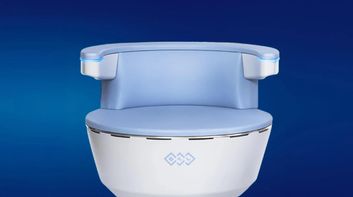
Emsella uses electromagnetic energy to stimulate repeated contractions of the pelvic floor muscles while the patient sits on a specially designed chair.
The treatment is intended to help improve pelvic floor muscle strength and function, which may help reduce urinary leakage in suitable patients.
What types of urinary leakage can Emsella help with?
Urinary incontinence is not a single condition. It can occur in different forms, and identifying the type of leakage is important before deciding on treatment.
Stress urinary incontinence
Stress urinary incontinence is the involuntary leakage of urine when pressure is placed on the bladder.
This may happen when you:
- Cough or sneeze
- Laugh
- Exercise or run
- Lift something heavy
- Jump or perform other physical activities
It is often associated with weakness or reduced support of the pelvic floor muscles.
Mixed urinary incontinence
Some women experience both stress urinary incontinence and urgency-related leakage.
They may leak urine when coughing or exercising, as well as experience a sudden, strong urge to urinate that is difficult to control.
Emsella may be considered for some women with stress or mixed urinary incontinence, depending on their assessment and symptoms.
However, urinary leakage caused by an overactive bladder, infection or another underlying condition may require a different treatment approach.
How does Emsella work?
Emsella uses HIFEM technology to stimulate the pelvic floor muscles.
During treatment, the electromagnetic field induces repeated muscle contractions. These contractions are designed to activate the pelvic floor muscles more intensely than a person may be able to achieve through voluntary contractions alone.
The aim is to improve muscle strength and function over a course of treatment.
Emsella is not a surgical procedure. There are no injections or incisions, and the treatment is performed while you remain seated on the chair.
What happens during an Emsella session?
An Emsella session is generally straightforward.
You sit on the Emsella chair, fully clothed, while the device delivers electromagnetic stimulation to the pelvic floor muscles.
During the session, you may feel strong contractions or a pulsing sensation in the pelvic region. The intensity can be adjusted according to your comfort and the treatment plan.
A typical session lasts approximately 28 minutes.
At Adrita Menopause Wellness in Gurgaon, the recommended treatment plan is determined after an assessment with Dr. Ankita Mittal.
A commonly used course consists of six sessions, usually scheduled over approximately three weeks. The exact number and frequency of sessions may vary depending on individual needs and clinical suitability.
How effective is Emsella for urinary leakage?
Research on Emsella and HIFEM technology has reported improvements in urinary incontinence symptoms in some women.
In one study involving 35 women with stress or mixed urinary incontinence, participants reported improvement in their urinary symptoms after six Emsella sessions. However, this was a relatively small study, and larger, well-designed studies are needed to establish how consistently the treatment works and how long its benefits last.
It is important to understand that Emsella does not guarantee complete relief from urinary leakage. The response to treatment can vary depending on the type of incontinence, the severity of symptoms and other individual factors.
A medical assessment helps determine whether Emsella is an appropriate option for you.
Is Emsella a replacement for pelvic floor exercises?
No.
Supervised pelvic floor muscle training remains a first-line treatment for women with stress or mixed urinary incontinence. It involves learning how to correctly contract and relax the pelvic floor muscles, followed by a structured exercise programme.
Emsella may be considered as an additional treatment option for suitable women, but it should not automatically replace pelvic floor muscle training or other recommended care.
The most appropriate approach depends on your symptoms, examination findings and treatment goals.
Who may be a suitable candidate for Emsella?
Emsella may be considered for women who:
- Experience urinary leakage when coughing, sneezing, laughing or exercising
- Have stress or mixed urinary incontinence
- Want to explore a non-surgical treatment option
- Have been assessed and found suitable for the treatment
It may not be suitable for everyone.
Women with certain implanted electronic devices or metal implants, and those who are pregnant, may not be eligible for Emsella. Other medical conditions or contraindications may also affect suitability.
Your doctor will review your medical history and assess whether the treatment is appropriate before recommending it.
When should you see a doctor for urinary leakage?
Urinary leakage is not something you have to accept as a normal part of ageing, childbirth or menopause.
If you experience leakage regularly, it is worth discussing it with a gynaecologist.
A medical assessment can help identify the type of urinary incontinence and rule out other causes, such as a urinary tract infection or bladder-related condition.
You should seek medical advice particularly if urinary leakage is accompanied by pain, blood in the urine, recurrent urinary infections, difficulty passing urine or a sudden change in bladder symptoms.
Emsella Treatment in Gurgaon at Adrita Menopause Wellness
If you are looking for Emsella treatment in Gurgaon or exploring non-surgical options for urinary leakage, a consultation can help you understand which treatment may be suitable for your symptoms.
At Adrita Menopause Wellness, Dr. Ankita Mittal, Obstetrician-Gynaecologist and Menopause Specialist, provides individualised care for women experiencing urinary incontinence and other pelvic health concerns.
Emsella treatment is available at the clinic in Gurgaon for women who are assessed as suitable candidates.
The goal is not simply to offer a machine-based treatment, but to help you understand the cause of your symptoms and choose an appropriate treatment plan.
You do not have to continue planning your life around urinary leakage. With the right assessment and care, it is possible to find a treatment approach that helps you feel more confident and comfortable in your daily activities.
References
1. Is the High-Intensity Focused Electromagnetic Energy an Effective Treatment for Urinary Incontinence in Women? International Journal of Women’s Health. 2024.
Study of 35 women with stress or mixed urinary incontinence who underwent Emsella treatment.
2. NICE. Urinary incontinence and pelvic organ prolapse in women: management (NG123).
Recommendations include supervised pelvic floor muscle training for at least three months as first-line treatment for stress or mixed urinary incontinence.


